
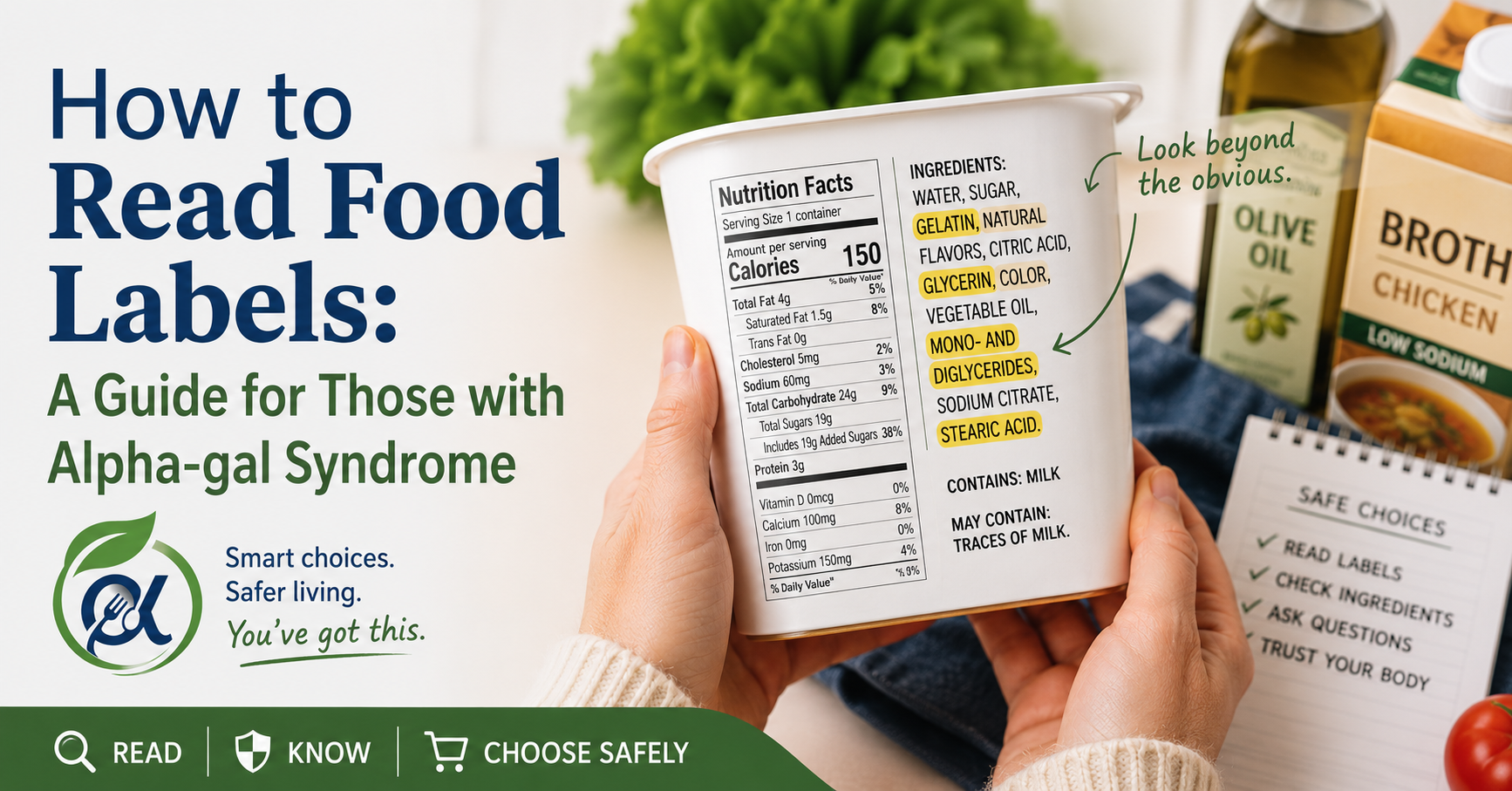
Living with Alpha-gal Syndrome (AGS) can feel overwhelming at first, especially when it comes to grocery shopping. Foods that once seemed harmless may contain hidden substances capable of triggering allergic reactions. Learning how to read food labels carefully is one of the most important skills for staying safe and confident after diagnosis.
The good news is that label reading gets easier with practice. Once you know what to watch for and where hidden mammal-derived ingredients commonly appear, grocery shopping becomes much less stressful.
By using this website, you acknowledge that you have read, understood, and agree to the terms of our full disclaimer.
If you do not agree with any part of the disclaimer, please discontinue use of this site.
Understanding Alpha-gal Syndrome and Food Labels
Alpha-gal Syndrome is a food allergy linked primarily to bites from certain ticks, including the Lone Star Tick. People with AGS can react to mammalian meat and other products that contain the alpha-gal sugar molecule. Reactions can range from mild digestive issues to severe allergic reactions and may happen several hours after eating.
Unlike many food allergies, alpha-gal can hide in unexpected places. Mammal-derived ingredients may appear in snacks, soups, candies, processed foods, medications, and more. Because of this, reading ingredient labels carefully is essential.
Food manufacturers are required to list major components on the label, but mammal-derived substances can sometimes be hidden behind unfamiliar terms. Understanding what these terms mean can help people with AGS make safer food choices.

Key Components of Food Labels to Look For
When checking a product, focus on three main areas:
1. Allergen Statements
This is the fastest way to identify a few of the main allergens. The Allergen Statement is usually in bold letters at the end of the Ingredient List. Many packaged foods include statements such as:
- “Contains milk”
- “Contains gelatin”
- “May contain dairy”
While these statements are helpful, they are not designed specifically for AGS. At the time of this post, alpha-gal is not on the FDA’s list of major food allergens. Therefore, a product may contain mammal-derived ingredients even if they do not appear in the allergen warning.
2. Ingredient List
The ingredient list is the most important part of the label. Ingredients are listed from largest amount to smallest amount. Watch carefully for obvious mammal products such as:
Some ingredients are less obvious and may require additional research.
3. Marketing Claims and Specialty Labels
Labels such as “vegan,” “vegetarian,” and “kosher” can be helpful, but they do not automatically mean a product is safe for people with AGS. These labels are designed to meet specific dietary or religious standards and may not address ingredients, processing aids, or manufacturing practices that concern individuals with AGS. For example, a vegan product may contain ingredients that are generally considered safe but trigger reactions in some people with AGS due to individual sensitivities or processing methods. Likewise, kosher products can still contain beef-derived ingredients that meet kosher requirements. Always read the full ingredient list and, when necessary, contact the manufacturer to verify ingredient sourcing and processing practices rather than relying solely on the package claims.
Common Ingredients to Avoid
Mammal-based Fats
Watch for ingredients such as:
- Lard – Derived from hogs.
- Oleic Acid – May be a plant or a mammal oil.
- Shortening – May contain mammal fats unless specifically labeled vegetable shortening.
- Suet – May be derived from cattle, sheep or other mammals.
- Tallow – Most often rendered from cattle, but may be from hogs or sheep.
These are sometimes used in baked goods, fried foods, refried beans, and processed snacks.

Broth and Stock
Beef broth, beef stock, pork broth, pork stock, bone broth, and other mammal-derived broths may appear in soups, gravies, rice mixes, stuffing mixes, and seasoning packets.
Carrageenan
Carrageenan is extracted from red seaweed and contains galactose-(\alpha )-1,3-galactose, which is the exact same alpha-gal epitope found in mammals that triggers AGS.
Dairy
Although some people with AGS seemingly tolerate dairy, many others react to it. Common dairy ingredients include:
Because reactions vary greatly, it is important to pay close attention to your personal symptoms.

Gelatin
Gelatin is generally made from mammal collagen and, among other things, it commonly appears in:
- Yogurt
- Sour cream
- Jello-O
- Pudding
- Marshmallows
- Gummies
- Fruit snacks
- Capsules for medications and supplements
- And more…
Vegan or vegetarian products may contain fish gelatin, but it may not be specified as such. When in doubt, contact the manufacturer for confirmation.
Gums
- Gellan Gum
- Gellan gum is made by feeding sugar to a specific type of bacteria. As the bacteria consume the sugar, they produce a substance that is collected, purified, and turned into the gellan gum used in foods and beverages. Although gellan gum is not derived from mammals, some people with Alpha-gal Syndrome report reactions to products containing it, possibly due to individual sensitivities or other ingredients in the food.
- Guar Gum
- Guar gum itself can cause severe, independent allergic reactions and anaphylaxis in sensitive individuals, which complicates symptom management.
- Because AGS causes immune flare-ups throughout the digestive system, consuming thickeners like guar gum can cause inflammation and gastrointestinal distress.
- Gum acacia (also called acacia gum or gum arabic)
- Gum acacia is derived from the sap of acacia trees and is not a mammal-derived ingredient.
- While gum acacia itself is plant-based, some people with AGS report sensitivity to it. The reason is unknown, and may be caused by structural similarities, cross-contamination or other GI issues.
- Locust Bean Gum (also known as Carob Gum)
- Locust bean gum is plant-based, but may undergo cross-contamination during processing. It is also believed to cause gut irritation since many people with AGS are highly sensitive.
- Xanthan Gum
- Certain bacteria used to ferment and produce xanthan gum may naturally express alpha-gal.
- Some manufacturers use mammal-based byproducts (like whey) in the bacterial growth media, which can contain the alpha-gal molecule.
“Natural Flavors” and “Flavorings”
Natural flavors can sometimes be derived from mammal sources. In most cases, you need to contact the manufacturer directly to ask whether flavorings are plant-based or mammal-derived. Unfortunately, this ingredient is often considered “proprietary”, and they are not required to disclose this information.

Rosemary Extract
Many people with Alpha-gal Syndrome are cautious about rosemary extract because the ingredient can be produced using different manufacturing processes. The rosemary plant itself does not naturally contain alpha-gal. However, some manufacturers use mammal-derived carriers, solvents, or processing aids during production, while others use plant-based alternatives. Because labels simply state “rosemary extract,” consumers usually cannot determine how it was processed. Ingredient sourcing and manufacturing methods vary between companies. Some highly sensitive individuals avoid rosemary extract unless the manufacturer confirms it is plant-derived and free of mammal-derived processing aids. It is important to note that reactions to rosemary extract are not universal among people with AGS, and sensitivity can vary significantly from person to person.
Sausage and Hot Dog Casings
Even when a product is made from chicken or turkey, it may not be safe for people with Alpha-gal Syndrome. Many sausages and hot dogs are made with natural casings, which are often derived from the intestines of hogs, sheep, or cattle. Unfortunately, the type of casing used is not always clearly listed in the ingredient statement. If a package does not specifically state that it uses a synthetic, collagen-free, or plant-based casing, consider contacting the manufacturer to verify the source before consuming the product.

Sugar
Many people with Alpha-gal Syndrome are surprised to learn that most refined white sugar is processed using bone char, a filtering material made from cattle bones. Since bone char is used during the refining process it is not considered an ingredient in the finished product. Many people with AGS find that they react to sugar. Choosing certified organic sugar can provide peace of mind because it is not permitted to be filtered through bone char under U.S. organic standards. As with many aspects of AGS, sensitivity varies from person to person, so it is important to make choices based on your own reactions and comfort level.
Hidden Mammal Ingredients
Disclaimer: This list is intended as a general guide and may not include every ingredient, additive, processing aid, or manufacturing practice that could be a concern for people with Alpha-gal Syndrome. Ingredient sourcing and production methods can change without notice, and individual sensitivities vary widely. Always read labels carefully, contact manufacturers when necessary, and consult your healthcare provider regarding your specific dietary needs.
Some less obvious ingredients may include mammal-derived components, including:
- Collagen – Usually derived from mammals unless specifically marine-sourced.
- Enzymes – Sometimes mammal-derived, especially in cheese products.
- Glycerin or Glycerol – May be from mammal fat.
- Magnesium Stearate – Could be derived from plants or mammals.
- Mono- and diglycerides – May be mammal-derived.
- Polysorbate 80 – made by combining sorbitol, ethylene oxide, and oleic acid, a fatty acid that can be obtained from either vegetable oils or animal fats (tallow).
- Rennet – Used in some cheeses, and often obtained from mammals.
- Stearic Acid – May be mammal or plant based.
Ingredient sourcing can vary by manufacturer, so contacting companies directly is often necessary.

Tips for Navigating the Grocery Store
Stick With Simple Foods at First
When newly diagnosed, many people find it easier to focus on simple whole foods such as:
- Fresh fruits and vegetables
- Poultry (Chicken, Turkey, Duck, Goose, Cornish Hens, Pheasant, Quail) – Avoid any poultry with added ingredients until you verify it’s safety with the manufacturer.
- Fish
- Rice
- Dried Beans
- Plant-based products
Fewer ingredients usually means fewer unpleasant surprises. After I was diagnosed, I ate homemade beans and rice for the first two weeks while I was researching safe foods.
Read Every Label Every Time
Manufacturers can change recipes without warning. Even if a product was safe before, ingredients may change later.
Use Manufacturer Websites and Customer Service
Many companies provide allergen information online. Calling or emailing customer service can help clarify whether ingredients are plant-based or mammal-derived.
Be Careful With “Vegan” Labels
Vegan foods are often helpful for people with AGS because they do not contain mammal ingredients. However, it is still important to read labels carefully for cross-contamination or unexpected additives. For example, carrageenan is technically vegan, but causes reactions in many people with Alpha-gal Syndrome.
Keep a Safe Foods List
Many people with AGS keep a list of products and brands they tolerate well. This can make shopping trips faster and less stressful.

Final Thoughts
Adjusting to Alpha-gal Syndrome takes time, and learning to read labels can feel frustrating in the beginning. Over time, ingredient names become more familiar and shopping becomes easier.
When in doubt, choose simpler foods and contact manufacturers for clarification. Careful label reading is one of the best ways to reduce accidental exposures and feel more confident managing life with AGS.

Frequently Asked Questions About Reading Food Labels with Alpha-gal Syndrome
Can people with Alpha-gal Syndrome eat chicken?
Chicken is not a mammal and does not naturally contain the alpha-gal sugar molecule. Current guidance from the CDC considers poultry safe for most people with Alpha-gal Syndrome. However, some members of the AGS community report symptoms after eating certain chicken products. In many cases, the issue may be related to mammal-derived ingredients in seasonings, broths, marinades, injected solutions, or sausage casings rather than the chicken itself. Because individual sensitivities vary, it is important to pay attention to your own reactions.
Can Eggs Cause Reactions in People with Alpha-gal Syndrome?
Eggs do not naturally contain alpha-gal and are generally considered safe for people with AGS according to current CDC guidance. However, some individuals within the AGS community report symptoms after eating certain eggs. Generally these eggs are from free range chickens that consume mice, table scraps, or animal-based feed. At this time, there is no published research confirming that alpha-gal transfers into eggs through a chicken’s diet. Because experiences vary, some highly sensitive individuals choose vegetarian-fed eggs. More research is needed to determine whether feed practices play a role in these reports.
I personally noticed symptoms after eating farm-fresh eggs from chickens that were being fed pork products. When I switched to vegetarian-fed eggs, my symptoms improved. This is my own experience and does not necessarily reflect how every person with AGS will respond.
Is dairy safe for people with Alpha-gal Syndrome?
Dairy affects people with AGS differently. Some individuals seem to tolerate milk, cheese, butter, and other dairy products, while others experience symptoms after consuming them. Because sensitivity varies, it is important to pay attention to your body’s response.
Are vegan foods always safe for Alpha-gal Syndrome?
Not necessarily. Vegan products do not contain mammal-derived ingredients, but some people with AGS may react to certain additives, processing methods, or other ingredients. Always read the ingredient list carefully and evaluate products based on your individual sensitivities.
Are hot dogs and sausage casings safe for people with AGS?
Not always. Some chicken sausages and turkey hot dogs are made with natural casings derived from hogs, sheep, or cattle. Because casings are not always clearly identified on food labels, contacting the manufacturer may be necessary to verify the source.
Is organic sugar better for people with Alpha-gal Syndrome?
Many people with AGS choose organic sugar because U.S. organic standards do not allow bone char filtration during processing. While bone char is not considered an ingredient in the finished sugar, some highly sensitive individuals prefer organic sugar to avoid products processed with mammal-derived materials.
What should I do if I don’t recognize an ingredient?
When you encounter an unfamiliar ingredient, research it before consuming the product. Manufacturer websites, customer service departments, and trusted AGS resources can help determine whether an ingredient is plant-based, animal-derived, or produced using mammal-derived processing aids.
Do food manufacturers have to disclose all mammal-derived ingredients?
Not always. Food manufacturers are generally required to list ingredients on product labels, but certain components may be grouped under broad terms such as “natural flavors,” “flavorings,” or “spices.” This can make it difficult for people with Alpha-gal Syndrome to determine whether a product contains mammal-derived ingredients or processing aids.
Many people with AGS contact manufacturers for clarification, only to be told the information is proprietary or supplied by a third-party vendor. When a company cannot verify the source of ingredients such as natural flavors or rosemary extract, some individuals choose to avoid the product and select alternatives with simpler, more transparent ingredient lists.
How often should I recheck labels on products I regularly buy?
Every time you purchase them. Manufacturers can change ingredients, suppliers, and production methods without notice. A product that was safe last month may contain different ingredients today, making it important to review labels regularly.
What is the safest way to shop after an Alpha-gal Syndrome diagnosis?
Many newly diagnosed individuals find it helpful to start with simple whole foods such as poultry, fish, fresh fruits and vegetables, rice, beans, and carefully selected packaged products. As you become more familiar with ingredient labels and your personal triggers, grocery shopping becomes much easier and less stressful.
References
- Centers for Disease Control and Prevention (CDC) – Alpha-gal Syndrome
- Mayo Clinic – Alpha-gal Syndrome Overview
- American Academy of Allergy, Asthma & Immunology – Alpha-gal and Food Allergies
- Ace Fitness – Gums: Is There Danger Lurking in Your Food?
- FDA – Types of Food Ingredients
- LLI – Foods; labeling of spices, flavorings, colorings and chemical preservatives.
- Legal Clarity – FDA Natural Flavors List: What’s Approved and Why
- Legal Clarity – What Information Is Not Required on Food Labels?
- Legal Clarity – Artificial Flavor: FDA Definition and Labeling Requirements
- LLI – Animal foods; labeling of spices, flavorings, colorings, and chemical preservatives.
- FDA – “Trade Secret” Ingredients
- USDA – Natural Flavorings on Meat and Poultry Labels